
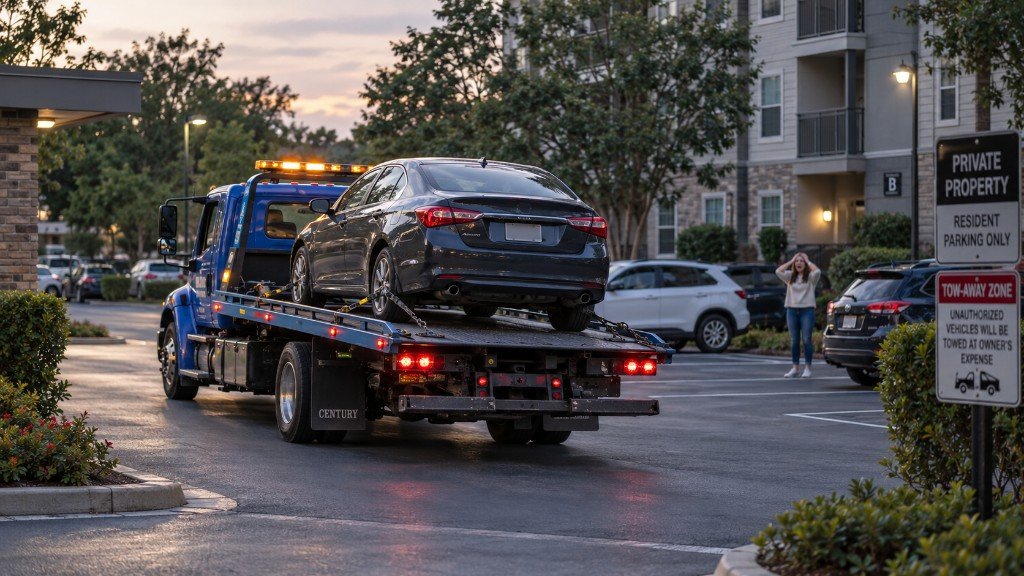
Getting back to where you parked and realizing your car is gone can be stressful.
Was it stolen? Was it towed? Where did it go? How much will it cost to get it back?
Whether your vehicle was removed after an accident, breakdown, parking violation, or from private property, knowing what to do next can save you time and frustration.
This guide explains what happens after your car gets towed, how to locate your vehicle, what you may need to retrieve it, and what questions to ask the towing company before heading to the tow yard.
Why Do Cars Get Towed?
Vehicles are towed for many reasons.
Common situations include:
- Vehicle breakdowns
- Car accidents
- Illegal or restricted parking
- Blocking a driveway
- Parking on private property without authorization
- Police-requested towing
- Abandoned vehicles
- Disabled vehicles creating a road hazard
- Vehicle recovery after an accident
- Mechanical problems requiring transportation to a repair shop
The process for getting your vehicle back may depend on why it was towed and who authorized the tow.
Step 1: Confirm That Your Vehicle Was Towed
Before assuming your vehicle was stolen, determine whether it may have been removed by a towing company.
Look around the area where the vehicle was parked. If you were parked on private property, there may be signs showing the towing company responsible for removing unauthorized vehicles.
You can also contact:
- The property manager
- Parking facility
- Local law enforcement
- Municipal parking authority
- Building management
- The towing company listed on nearby signs
If your vehicle disappeared after an accident, the responding agency or towing provider may be able to tell you where it was taken.
Step 2: Find Out Where Your Car Was Towed
One of the most common questions drivers ask is:
How do I find my towed car?
Start with the organization most likely to have authorized the tow.
If the vehicle was removed from an apartment complex, contact the property manager. If police ordered the tow, contact the appropriate local agency and ask where the vehicle was taken.
When calling, have as much vehicle information ready as possible:
- Vehicle make
- Vehicle model
- Vehicle color
- License plate number
- VIN, if available
- Location where the vehicle was parked
- Approximate time it disappeared
Once you know which towing company has the vehicle, contact that company directly.
Step 3: Call the Tow Yard Before Going There
Do not immediately drive to the tow yard without checking the requirements first.
Call the towing company and ask:
- Do you have my vehicle?
- What documents do I need to bring?
- What is the current amount due?
- What payment methods do you accept?
- What are your vehicle-release hours?
- Are there additional storage fees?
- Can someone else retrieve the vehicle for me?
Requirements can vary between towing companies and locations, so confirming everything beforehand can help prevent an unnecessary trip.
Step 4: Bring the Required Documents
A tow yard may require you to prove that you are authorized to retrieve the vehicle.
Depending on the situation, you may be asked for:
- Government-issued photo identification
- Vehicle registration
- Proof of ownership
- Proof of insurance
- Vehicle title in some circumstances
- Additional authorization if someone else is retrieving the vehicle
The exact requirements vary, so always ask the towing company what is needed before arriving.
Step 5: Understand the Towing and Storage Charges
A common question is:
How much does it cost to get a car out of a tow yard?
There is no universal price.
Costs may depend on:
- Distance the vehicle was towed
- Type of vehicle
- Type of tow truck required
- Reason for the tow
- Storage time
- After-hours service
- Recovery work
- Local regulations
- Additional services required
There may be a towing fee as well as a separate tow yard storage fee.
Storage charges may continue while the vehicle remains at the facility, so it can be helpful to retrieve the vehicle as soon as reasonably possible.
Ask for a breakdown of the charges if anything is unclear.
Step 6: Inspect Your Vehicle
Before leaving the towing facility, look over your vehicle.
Check its general condition and compare it with what you remember before the tow.
Consider taking photos of:
- Front of the vehicle
- Rear of the vehicle
- Both sides
- Wheels
- Existing body damage
- Interior, when appropriate
If your vehicle was involved in an accident, some damage may have happened before the towing company arrived.
Documenting the vehicle's condition can still be useful for your records or an insurance claim.
What Happens If Your Car Was Towed After an Accident?
Accident-related towing can be different from a normal breakdown.
If your car cannot safely be driven after a collision, it may be transported to:
- A tow yard
- Collision repair center
- Auto repair shop
- Body shop
- Insurance-approved facility
- Another approved destination
After an accident, consider contacting your insurance company as soon as practical.
Ask about:
- Towing coverage
- Storage charges
- Collision repairs
- Where the vehicle should be moved
- Vehicle inspection
- Insurance claims
- Rental-car coverage
You may also want to find out whether the vehicle can be moved from the tow yard directly to your preferred repair facility.
Can You Get Personal Belongings From a Towed Car?
Drivers often realize after a tow that important belongings are still inside the vehicle.
These might include:
- Work equipment
- Wallets
- Documents
- Child seats
- Medication
- Electronics
- Personal items
Policies regarding access to a stored vehicle vary.
Contact the towing company before visiting and ask whether you can access the vehicle and what identification or documentation is required.
Can Someone Else Pick Up Your Towed Vehicle?
Possibly, but do not assume they can.
Some towing facilities may require the registered owner to be present, while others may allow an authorized person to retrieve the vehicle if specific documentation is provided.
Ask the towing company what another person would need if they are picking up the vehicle for you.
What Happens If You Don't Pick Up Your Car Quickly?
Leaving a vehicle at a tow yard may result in additional storage costs.
Rules involving long-term storage, notices, abandoned vehicles, liens, and vehicle disposal vary by state and local law.
If you cannot retrieve your vehicle immediately, contact the towing company and ask:
- How storage fees are calculated
- When additional fees apply
- Whether paperwork is required
- What deadlines apply to your vehicle
Do not assume the rules are the same everywhere.
What If Your Car Broke Down Instead?
Sometimes you may think you need a tow when roadside assistance could solve the problem.
Depending on the company, roadside assistance may include:
Jump Starts
If your battery is dead but the vehicle otherwise works, a jump start may get you moving again.
Flat Tire Assistance
If you have a usable spare tire, roadside assistance may be able to replace the flat without towing the vehicle.
Vehicle Lockouts
If your keys are locked inside the car, a lockout service may solve the problem without towing.
Fuel Delivery
If you run out of fuel, roadside assistance may be able to bring enough to get you back on the road.
Winch-Out Services
If your vehicle is stuck in mud, snow, a ditch, or another difficult area, recovery equipment may be needed.
Towing
When the problem cannot be resolved safely at the roadside, the vehicle may need transportation to your home, mechanic, dealership, or repair facility.
How to Find a Towing Company When You Need One
Drivers often search for:
- Tow truck near me
- Towing near me
- Towing company near me
- 24 hour towing near me
- Roadside assistance near me
- Emergency towing near me
- Flatbed towing near me
- Car towing service near me
- Vehicle recovery near me
But the nearest towing company is not automatically the right company for every job.
Before calling, check whether the towing provider handles:
- Your type of vehicle
- Your location
- The service you need
- Your destination
- The required towing equipment
For example, towing a passenger sedan can require different equipment than recovering a commercial truck or transporting a motorcycle.
Find Towing Companies Through Ignite Tow Network
Ignite Tow Network helps drivers find towing and roadside companies based on location and available services.
Drivers can review company information and contact towing businesses directly.
Depending on the company profile, you may be able to view:
- Towing services
- Roadside services
- Service areas
- Company information
- Photos
- Contact details
- Website
- Social media
The goal is simple:
Find the right towing company and contact them directly.
Frequently Asked Questions
How do I find out where my car was towed?
Start by checking signs near where the vehicle was parked or contacting the property owner, parking authority, or law enforcement agency that may have authorized the tow. Have your license plate and vehicle information ready.
What documents do I need to get my car from a tow yard?
Requirements vary, but you may need photo identification, vehicle registration, proof of ownership, insurance information, or other documentation. Contact the tow yard before visiting.
How much does it cost to get a car out of a tow yard?
The total may include towing charges, mileage, storage fees, recovery charges, and other applicable fees. Costs vary depending on location and circumstances.
Do tow yards charge storage fees?
Many towing facilities charge for storing vehicles. How those charges are calculated depends on the business and applicable local regulations.
Can someone else get my car from the tow yard?
Possibly. The towing company may require written authorization or specific documents before releasing the vehicle to someone other than the registered owner.
What happens if I don't pick up my towed car?
Additional storage charges may accumulate, and local laws can establish procedures for vehicles left at tow facilities for extended periods. Contact the facility as soon as possible to understand the requirements.
Can insurance cover towing and storage fees?
Some auto insurance policies include towing, roadside assistance, or accident-related towing coverage. Coverage depends on your policy and the circumstances of the tow.
Should I call a tow truck if my car won't start?
Not always. A dead battery, flat tire, vehicle lockout, or lack of fuel may be handled through roadside assistance without transporting the vehicle.